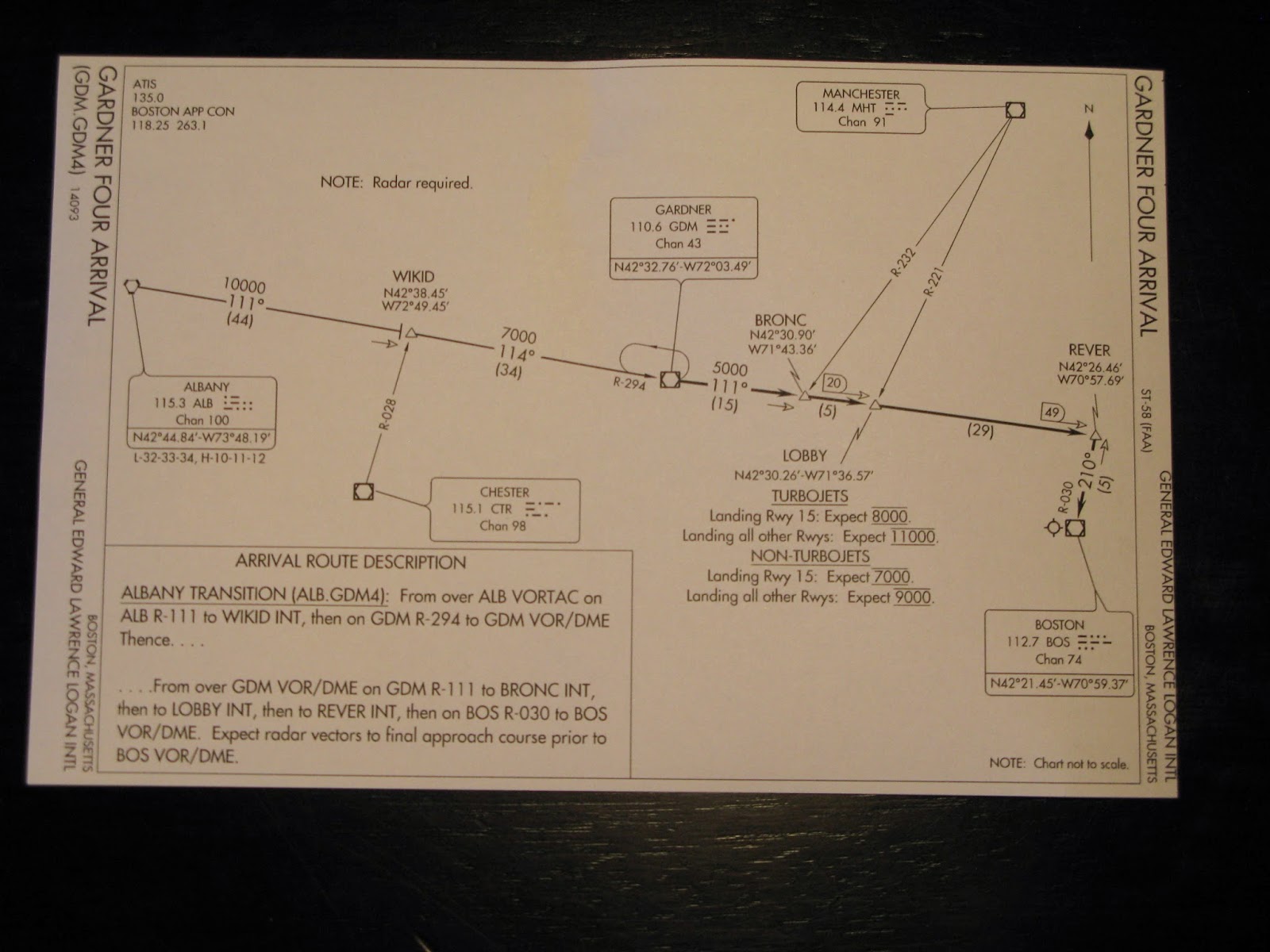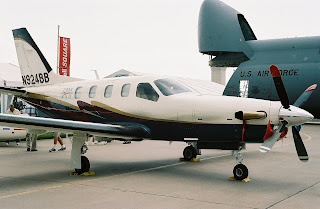
| Blue Angels, San Francisco |
Wednesday, April 25, 2018
Exit Hold, Proceed As Cleared
It has been an up and down health ride these last three months
or so, which means some things have been good, some things have been a little
concerning, but we are now getting things resolved and back on track, but with
some changes.
As you probably know, almost exactly two years ago I was
lucky to get placed in a research study and was randomly selected to try two
immunology drugs, to see if they were more effective as a first treatment than
chemo or chemo in combination with one immunology drug. The first year went really well. The lesions were reduced significantly and I
had almost no side effects. Then the side effects started kicking in, itching,
joint pain, stiffness, lack of appetite, fatigue, but I accepted that as the
price to pay for a continued reduction in the size of the lesions. Then, my liver, and to a lesser extent my
pancreas, started showing signs of stress, based on biweekly blood tests. So my oncologist, Dr. Alan Kramer, whom I like
very much, respect, and have complete confidence in, recommended we give my
system a rest from the immune drugs and take steroids to eliminate any
inflammation.
That part has been great.
Within 24 hours my pain was gone, the itching was gone (we’re talking
about, “Oh my god, will anything stop this itching?”), the stiffness and
inflexibility was gone, and very importantly, my appetite was back and I quit
losing weight. I had a normal life again
and was so relieved.
But it turns out that the problems with the liver, bile duct
specifically, were probably not being caused by inflammation, but rather by
lymph nodes pressing on the duct. What
is causing the pressure can’t be discerned for sure from the CT scans, and a
biopsy doesn’t seem to be warranted, because whatever it is needs to be treated
with either steroids or chemotherapy, and I’m on both. So that is the direction we’re going, starting
at my next appointment, a week from now.
Dr. Kramer has said that this chemo is very well tolerated,
maybe a rash, maybe some nausea, and has been effective with others. So, having been such of fan of the immunology
therapy, it is hard to put it aside, but it’s effectiveness seems to have
ended. As Dr. Kramer was giving instructions
to his nurses, I said, “I feel like I’m changing from a Red Sox fan to a Yankees
fan.” Which is about as likely for me to
do as it would a Manhattan liberal announcing that he has become a neo
conservative. No more power lunch tables for you, you’re going back next to the
restrooms.
It’s a nice restroom though, with cloth towels and nice
smelling soap. I’m okay.
Thursday, May 18, 2017
Hold As Published
When that clearance is issued it is normally followed by,
“Expect further clearance in xx minutes.” In this case, expect further
clearance in about a year.
Let me explain.
This blog is going to enter a hold for about a year for several reasons. The first and most obvious is that it has been in slow flight for a couple of years anyway, and there are two reasons for that. The first is that I have kind of run out of war stories and important flying concepts to write about. The second is directly related: I’m not flying anymore. I don’t experience new situations and even when something comes up, in the news for instance, I’m not sure my now 10 years lack of direct experience with aviation makes me a relevant commentator anymore. Everything in aviation is now flat screen and computer generated, even at the general aviation level, and my experience with that stopped with the Boeing 757/767, an early hybrid of both round dial and flat screen displays. ADS-B was just coming in as I was going out. Virtually all navigation is now GPS, supplemented with DME and INS—if you’ve got it, use it--but GPS can function perfectly at all levels on its own. So, even though navigation is kind of one of my areas of expertise, there isn’t much to add anymore.
So my legitimacy as an aviation writer is somewhat suspect at this point. But there’s more. I was diagnosed with lung cancer (adeno carcinoma, for the medical aviators among us) about a year ago. I was lucky enough to get into a research trial sponsored by Bristol Meyers Squibb and got lucky again when I was randomly assigned to the group that receives two of their immunotherapy drugs. So far I have responded well with minimal side effects. I will stay on this regime for as long as the therapy is effective and doesn’t turn on healthy organs, which it can do. The trial ends for me a year from now, and after that my treatments will probably be continued outside the study. Hence the “expect further clearance” in about a year.
This also means I can’t hold a Third Class Medical. (At least, I assume I can’t. I don’t want to take a chance on trying to get one, get turned down, and lose my chance to fly Light Sport Aircraft.) So my thoughts about flying turn from what sort of serious transportation type aircraft would I like to have, if I could just find a way to finance one, to if I’m limited to LSA, what might that be. I’m thinking Champ, an aircraft I have had a long longing for. We’ll see.
In any case, the picture above, taken at Oshkosh several years ago of an award winning Ryan PT-22, and probably the most beautiful aircraft I’ve ever seen (but you can see a bunch of beautiful aircraft at Oshkosh), is my inspiration.
I leave you with one aviation thought: Good landings mean nothing. Anyone can pull off a good landing, even after a horrible mess of a flight. But managing an aircraft to arrive, uneventfully, at a point where a safe landing can be made means everything. Don’t ever forget that.
Let me explain.
This blog is going to enter a hold for about a year for several reasons. The first and most obvious is that it has been in slow flight for a couple of years anyway, and there are two reasons for that. The first is that I have kind of run out of war stories and important flying concepts to write about. The second is directly related: I’m not flying anymore. I don’t experience new situations and even when something comes up, in the news for instance, I’m not sure my now 10 years lack of direct experience with aviation makes me a relevant commentator anymore. Everything in aviation is now flat screen and computer generated, even at the general aviation level, and my experience with that stopped with the Boeing 757/767, an early hybrid of both round dial and flat screen displays. ADS-B was just coming in as I was going out. Virtually all navigation is now GPS, supplemented with DME and INS—if you’ve got it, use it--but GPS can function perfectly at all levels on its own. So, even though navigation is kind of one of my areas of expertise, there isn’t much to add anymore.
So my legitimacy as an aviation writer is somewhat suspect at this point. But there’s more. I was diagnosed with lung cancer (adeno carcinoma, for the medical aviators among us) about a year ago. I was lucky enough to get into a research trial sponsored by Bristol Meyers Squibb and got lucky again when I was randomly assigned to the group that receives two of their immunotherapy drugs. So far I have responded well with minimal side effects. I will stay on this regime for as long as the therapy is effective and doesn’t turn on healthy organs, which it can do. The trial ends for me a year from now, and after that my treatments will probably be continued outside the study. Hence the “expect further clearance” in about a year.
This also means I can’t hold a Third Class Medical. (At least, I assume I can’t. I don’t want to take a chance on trying to get one, get turned down, and lose my chance to fly Light Sport Aircraft.) So my thoughts about flying turn from what sort of serious transportation type aircraft would I like to have, if I could just find a way to finance one, to if I’m limited to LSA, what might that be. I’m thinking Champ, an aircraft I have had a long longing for. We’ll see.
In any case, the picture above, taken at Oshkosh several years ago of an award winning Ryan PT-22, and probably the most beautiful aircraft I’ve ever seen (but you can see a bunch of beautiful aircraft at Oshkosh), is my inspiration.
I leave you with one aviation thought: Good landings mean nothing. Anyone can pull off a good landing, even after a horrible mess of a flight. But managing an aircraft to arrive, uneventfully, at a point where a safe landing can be made means everything. Don’t ever forget that.
Monday, February 16, 2015
The Slam Dunk
If you’ve done much flying into busier airports—and even
some not so busy but with defined arrival and departure procedures—you know all
about the dreaded “Slam Dunk.” The Slam
Dunk happens when you are held much higher close in to the airport than you’d
like to be, and then are finally given a descent to the altitude you wanted,
only now with an airport right underneath for a visual approach, or with the
localizer right in front of you and the glide slope underneath you. Why do they have to make this so hard?
The most common assumption is that it is for noise
abatement: trying to appease all those people on the ground who knew they were
buying a house next to a busy airport and then complained about all the
noise. So we get The Slam Dunk.
Noise abatement is a factor, but it isn’t a big one. The real reason is air traffic control. Let’s take a look at that.
Separating arrivals and departures at airports that aren’t
very busy isn’t hard. There seldom are
more than one or two aircraft in the local area and they are coming and going
in different directions, so separation can be as simple as assigning vectors to
keep them apart, maybe holding one at one altitude while the other climbs or
descends through it, or a speed adjustment—something simple that doesn’t affect
the descent profile substantially. A lot
of that is done at busy airports too, to get everyone in line and sequenced
properly. But it isn’t enough. Standard departure and arrival patterns have
to be created to organize and simply the controllers duties, and one of the
most important component of those procedures is to hold departures down to one
altitude until they have gotten some distance from the airport, and to keep
arrivals above that altitude until they’ve gotten to the point where they are
past the traffic departing. Once the
departure is out past the arrival, he is allowed to climb and the arrival
(finally) is allowed to descend. Otherwise you’d have traffic climbing and
descending right into each other. In order
to not hold the departure down any longer than necessary, they keep the arrivals
above the departures until that point where the arrival has just enough
airspace to get on down. That’s The Slam
Dunk.
Now you could say, “’Just enough’ according to whom?”
According to Airways Standards personnel who don’t have to actually fly them in
real world conditions? According to standards for turbine powered aircraft,
disregarding the concerns of recip pilots who don’t want to shock cool their
engines? Both good points, but the
situation isn’t so bad if: 1, You know The Slam Dunk is coming and you don’t
try to fight it but are ready for it; and 2, You know you have tools available
and are ready to use them, all of them, as necessary. So let’s go over that.
The first point is the easy one. There isn’t any point in requesting lower
over and over in this situation. Unless
you have an emergency, or are arriving late at night with only a few freight
dogs around, it just isn’t going to happen.
All you’re doing is wasting time that could be spent getting ready for
the descent when it does come. So that
leaves the tools. Let’ talk about engine
shock cooling. Mike Busch, who writes a
maintenance column for the EAA magazine “Sport Flying”, and who runs a business
managing maintenance for GA pilots, someone I respect very much, says there is
no hard evidence that rapid engine cooling damages engines, but plenty of
evidence that hot cylinder head temps does.
Of course, it’s still better to manage engine temps and not subject them
to rapid changes, but pulling an engine that has been coasting along at 50%
power or so back to idle is probably not going to do a lot of harm. So if that’s what it takes, that’s one tool.
But remember, you don’t have to come all the way back to
idle every time. A recip at idle creates
a lot of drag. At idle the propeller has
changed from pulling the aircraft to turning the engine, pumping a lot of air
and overcoming a lot of internal drag, while a turbine at idle is still
generating thrust. (For turbine aircraft, their ace in the hole is speed
brakes, and not being able to generate drag with the engines is why they have
them.) You can duplicate that by
bringing power back to whatever power setting equates to zero thrust. (Listen
for it—the sound changes as the engine starts to “back pedal”.) That’s a good
place to start and won’t shock cool the engine as much as coming all the way
back to idle does.
The other tools are pretty obvious: gear and flaps. Gear should probably go out first—it creates
a lot of drag and has to go down sooner or later—flaps next. Flaps don’t add much drag until you get down
to landing flaps, but you can start with the first notch of flaps once the
speed is below the flap extended limit.
So now you have power at zero thrust, gear down, approach flaps. In many cases that will be enough. If not, reduce the power to idle and when
slow enough go to full flaps. If you
know The Slam Dunk is coming and you start aggressively configuring drag the
second you get your descent clearance, it should work out just about right,
with a level off just before localizer intercept and underneath the glide
slope. Acting immediately and
aggressively, throwing everything at it if you have to—power to idle, full
flaps—is the key.
Once you understand that Slam Dunks are not some evil joke
that controllers like to pull on pilots just because they can, but are an
inevitable part of air traffic control at airports with more than local
traffic, you’re well on your way to dealing with them. And it feels pretty good when you know what to
do, are ready for it, and it all works out, sitting on the porch with the big
dogs, and looking pretty good doing it.
Monday, April 14, 2014
Professionalism and Non-Professional Pilots
What does professionalism have to do with general
aviation—with pilots who don’t fly for a living? A lot, I think, but first let’s
look at what we mean by “professionalism.”
The word “professionalism” gets thrown around to mean a lot
of different things. It’s one of those
words like “fairness” that means something different from one person to
another, and even to any one person depending on the circumstances. And that’s not necessarily a bad thing. One of the beauties and strengths of the
English language is its flexibility. But
it can lead to misunderstandings, and worse, to manipulation: when someone asks
you to “be fair”, they usually mean “Do it my way”.
Professionalism, in the literal sense, means to act
according to the customs, methods and ethics that have been established for
that profession. The connotation, if not
the actual sense, is always one of service first, profit second. Thus medicine, the law, accounting, are
considered to be professions. But we
often use the word in a broader sense. Commercial
pilots are often considered to be professionals, even if we think of their work
as more of a job than a profession. But
there certainly is a service first aspect to professional aviation and there
certainly are customs, methods and ethics related to it.
I often hear people use the work “professional” to mean
“objective” or “not emotional.” They say, “I put on my professional face.” “I
tried to act professionally, despite his unreasonableness.” “As a professional, I tried to give him a
balanced response, even though it was clear there was only one way to go.” And
so on. There’s nothing wrong with that,
as long as it is clear that that is the meaning intended. But it is more of a side effect than it is a description:
a person acting professionally will be objective and unemotional, but that’s
not all there is to being professional.
There is another characteristic of professionalism that I
think is very important, particularly for our discussion here. Professionals work with other
professionals. A surgeon doesn’t operate
alone, he or she operates in the company of other medical professionals. The lawyer’s arguments and briefs do not
exist in a vacuum, they are read and reviewed by other legal
professionals. The violinists doesn’t
play alone, he or she plays with other musicians. And they all know what they are seeing,
because they all do the same things themselves.
They can judge. A professional continuously
subjects his or her work to the opinions and observations and judgments of
other professionals, people whose judgments matter.
In a professional cockpit, there are always at least two
pilots, often more—jump seaters, check airmen, FAA inspectors. A professional
pilot doesn’t fly alone, he or she is always being observed by someone else
and, consciously or otherwise, being judged on his or her performance. Good performance is noted and admired and bad
performance is noted and remembered. A
professional pilot has a real incentive to do a good job and avoid mistakes:
both will be noted.
In turn, there are two different aspects to that
performance, one that I would call systemic and one that I would call
operational. The systemic is the overall
training and experience level of the pilot in question--his or her competence
in a general sense. Does this pilot seem
to be generally well trained and experienced and know what he or she is
doing? The operational is specific: How
good was that descent planning? How good an approach was that? How good a
crosswind landing was that?
Pilot hiring for professional positions is largely about
determining that the candidate first has the systemic training and experience
to do the job and fit in with other professionals, and second can perform at a
level that insures safety, efficiency, and comfort. The first part is done by verifying training
and experience claims and the later part with simulator rides. Backgrounds are checked and performance is
observed. As it will be every time that
pilots flies.
Where does this leave general aviation, those who fly as
single pilots (except for check rides, refreshers and review)? Their
performance is almost never observed by another pilot. He or she can operate the aircraft well,
badly, carefully or carelessly. Unless
there is a violation observed, a rarity, or an accident or incident, also rare,
no one knows.
Which brings up another important difference between the
professional and the non-professional pilot: for the single pilot, no else is
there to correct, critique and instruct.
Professional aviation is really an apprenticeship system: copilots learn
from captains, generally directly, but also indirectly, by observing the
captain’s performance, both good and bad.
The two pilots have each other to help each other, to learn from each
other and to correct each other. (And
copilots do correct captains, even if they have to be a bit diplomatic in doing
so: “Hey Boss, weren’t we cleared for the Back Course?”) So not only are observations
going on and judgments being made, instruction and correction are happening,
too. None of this happens in a single
pilot general aviation aircraft. No one’s fault, it just can’t happen.
So what can the non-professional do? The first thing to
recognize is that you can’t have too much training. The systemic part—the background and general competence
level comes mostly from training. A
little comes from experience, usually obtained the hard way, but training is
much more concentrated and effective. So
if all you’re doing is a biennial flight review, you’re not expanding your
systemic knowledge at all, or very, very, little. If you haven’t got an instrument rating,
start. Even if money is tight,
start. Every hour will help. Think about a new rating: seaplane, glider,
tail dragger, or start work on a commercial certificate. If you are instrument rated and fly mostly
one type of aircraft, take a ground school and simulator refresher course every
year. You don’t “learn to fly.” Flying is always a matter of continuing
education. If you aren’t getting regular training of some sort, you aren’t
getting any better as a pilot.
In the aircraft, imagine another pilot there, one with a lot
more experience, maybe even someone specific like the guy down the street who
flies for FedEx or the kid next door who went on to fly C-17s for the Air
Force. How much more careful would you be and how much better would you try to
fly if that person or someone like that were there in the airplane with you?
This isn’t play acting, this is discipline.
If you would want to make the best possible approach and landing for someone
who knows what you’re doing, why wouldn’t you want to do the same thing any
time, even alone?
Here’s one way to know you’re doing a really good job, even
if no one is there to observe and comment who is qualified to make that
call. If no one says anything at the end
of the flight except maybe, “Thanks, I enjoyed that,” that’s a good sign. When you do a really good job, it seems
ordinary, even boring. People are hard pressed to know what to say. When you do a lousy job, they may not know
what went wrong, but they’ll have a lot to ask and say. A really well planned and well executed
flight is boring: you take off, climb to altitude, cruise along for a while,
descend and land. No big deal. What’s
there to say?
So, train often, plan every flight thoroughly, assume an
experienced professional pilot is riding along with you, and treat yourself to
a little, knowing smile when you walk away from the airplane and no one says
anything. You earned it. Captain.
Wednesday, February 27, 2013
Weather Matters
I got a request the other day from someone who wanted to use
one of my articles in his online aviation course on computer flight planning. His
business is called www.PilotWeatherTraining.com, and I checked it out and it got me thinking
about weather. I haven’t tackled
aviation weather since I was writing full time back in the mid 80’s, and with
another 10,000 hours of so of experience since then, I thought it might be time to think about it
again. Specifically, what kind of weather matters, and what doesn’t?
First, what do we mean by the word “weather”? Weather is
atmospheric conditions. A severe clear day with no wind is still weather. But in aviation, when we talk about
“weather”, we mean the stuff that can adversely affect our flight. If the skies were never any worse than
scattered clouds, visibility greater than 10 miles and winds under 10 miles per
hour, we really wouldn’t ever need to worry much about the weather—it’s always
a “go”. But that’s not the case, not even in the relatively dry southwestern
states (US), so weather is something we have to take into account.
For the VFR only pilot, “weather” is not so much a question of avoiding the stuff that can really hurt you as it is having adequate visibility to navigate and avoid terrain and obstacles. Of course the VFR pilot wants to avoid freezing rain and thunderstorms and heavy turbulence, but that should largely take care of itself if he or she has adequate visibility in the first place. So what is “adequate”? “It depends” is always a safe answer but doesn’t get us very far. The normal VFR visibility minimums of 3 miles might be adequate, or it might not be. The VFR only pilot flying a Champ at 80 mph on a very hazy summer day on a very short trip over terrain he or she is totally familiar with can probably call 3 miles visibility adequate. Another pilot flying a Piper Arrow or a Cessna 182 on a longer trip over unfamiliar terrain would be asking for trouble in those conditions. So visibility depends a lot on speed and familiarity with the terrain.
What about clouds? VFR minimums say you must be at least
500 feet under any clouds, 2000 feet away from any clouds, and at least 1000
above any cloud. It’s okay to fly
between them and it’s okay to fly over them as long as you stay that far away
from them. (This is to provide some
reaction time in case an aircraft, one presumably operating under Instrument
Flight Rules, comes popping out of one of those clouds.) So I guess that means
that as long as we are willing to stay under the clouds, we could fly even with
overcast skies. And for short trips that
probably is okay. The problem with
overcast skies is that the ceiling almost always gets lower as you approach the
system that is causing the overcast. If
you are flying away from that system, toward higher ceilings and eventually
broken, then scattered clouds, fine.
Otherwise, you better not be going far because you’re going to find
yourself having to go lower and lower to stay under the overcast, and down that
road lies trouble.
The real problem with VFR only flying is its intended purpose: If you intend to fly VFR for transportation you are going to run into problems; if you intend to fly VFR for pleasure, you are probably going to have a ball. (See numerous previous posts on “Oshkosh”—Air Adventure—to get an idea of how much fun flying for fun can be.) And the reason is quite simple, even if it is still quite hard to accept: flying for transportation, that is, flying at a given time to a specific place over a given distance and course, requires tools to deal with the realities of weather, and VFR only flying doesn’t have those tools.
The only way to consistently and reliably fly for transportation is under Instrument Flight Rules with an appropriately equipped aircraft and by a suitably qualified and current instrument rated pilot. That takes care of the visibility limitations of VFR only flying, and it takes the risk out of flying on top of broken clouds or overcast skies, but now the problem of avoiding hazardous weather doesn’t take care of itself. So what are those hazards, and what can we do to avoid them?
I like to think of hazardous weather as any weather I don’t ever want to encounter in any aircraft. The L-1011 was a fabulous aircraft, I think the best air transport ever made. (Certainly newer aircraft have better systems and are more efficient, but manufacturers have discovered that aircraft don’t have to be the best that can be made, just good enough.) As good as it was, I still wouldn’t want to take it into thunderstorms, or severe turbulence, nor would I want to take it through heavy icing, hail, or freezing rain on takeoff, approach or landing. There are limits to the stresses any aircraft can take, and there are limits to the amount of ice it can carry and damage it can sustain. General aviation aircraft are normally certified to greater G limits than transport category aircraft, but I still wouldn’t want to take any aircraft into a thunderstorm or heavy turbulence. (That includes an F-16 stressed to plus 10 G’s, not that I’m going to get a chance to try.)
The L-1011 had every kind of anti-icing equipment imaginable, of course, and it also had something else—it could climb rapidly through the lower altitudes where serious icing is normally found up to the flight levels where the temps are so cold that icing is seldom found. Anti icing for turbofan aircraft is mostly a matter of keeping the engine cowling clear and the pitot/static system heated. General aviation aircraft are different, not just because they spend a lot of time at altitudes where icing occurs, but because it affects them differently. It is fairly easy to protect a propeller driven, reciprocating engine from ice: you need “hot “ props and an alternate air source. But keeping the aerodynamic surfaces clean—the wing, the tail, the rudder—that is a different matter. In some 12000 hours of flying jets, I can count on one hand the number of times I had to use wing deicing. In some 2000 hours flying general aviation aircraft, I can’t count the number of times I had to use wing deice—“the boots”—and I do remember many times when they didn’t work very well. Approval for flight in known icing is great, but only to get you out of it if you happen to fly into it. General aviation aircraft should avoid any icing conditions and, if encountered anyway, get out of them as soon as they can.
The real problem with VFR only flying is its intended purpose: If you intend to fly VFR for transportation you are going to run into problems; if you intend to fly VFR for pleasure, you are probably going to have a ball. (See numerous previous posts on “Oshkosh”—Air Adventure—to get an idea of how much fun flying for fun can be.) And the reason is quite simple, even if it is still quite hard to accept: flying for transportation, that is, flying at a given time to a specific place over a given distance and course, requires tools to deal with the realities of weather, and VFR only flying doesn’t have those tools.
The only way to consistently and reliably fly for transportation is under Instrument Flight Rules with an appropriately equipped aircraft and by a suitably qualified and current instrument rated pilot. That takes care of the visibility limitations of VFR only flying, and it takes the risk out of flying on top of broken clouds or overcast skies, but now the problem of avoiding hazardous weather doesn’t take care of itself. So what are those hazards, and what can we do to avoid them?
I like to think of hazardous weather as any weather I don’t ever want to encounter in any aircraft. The L-1011 was a fabulous aircraft, I think the best air transport ever made. (Certainly newer aircraft have better systems and are more efficient, but manufacturers have discovered that aircraft don’t have to be the best that can be made, just good enough.) As good as it was, I still wouldn’t want to take it into thunderstorms, or severe turbulence, nor would I want to take it through heavy icing, hail, or freezing rain on takeoff, approach or landing. There are limits to the stresses any aircraft can take, and there are limits to the amount of ice it can carry and damage it can sustain. General aviation aircraft are normally certified to greater G limits than transport category aircraft, but I still wouldn’t want to take any aircraft into a thunderstorm or heavy turbulence. (That includes an F-16 stressed to plus 10 G’s, not that I’m going to get a chance to try.)
The L-1011 had every kind of anti-icing equipment imaginable, of course, and it also had something else—it could climb rapidly through the lower altitudes where serious icing is normally found up to the flight levels where the temps are so cold that icing is seldom found. Anti icing for turbofan aircraft is mostly a matter of keeping the engine cowling clear and the pitot/static system heated. General aviation aircraft are different, not just because they spend a lot of time at altitudes where icing occurs, but because it affects them differently. It is fairly easy to protect a propeller driven, reciprocating engine from ice: you need “hot “ props and an alternate air source. But keeping the aerodynamic surfaces clean—the wing, the tail, the rudder—that is a different matter. In some 12000 hours of flying jets, I can count on one hand the number of times I had to use wing deicing. In some 2000 hours flying general aviation aircraft, I can’t count the number of times I had to use wing deice—“the boots”—and I do remember many times when they didn’t work very well. Approval for flight in known icing is great, but only to get you out of it if you happen to fly into it. General aviation aircraft should avoid any icing conditions and, if encountered anyway, get out of them as soon as they can.
The L-1011 also had an incredible radar, with a bunch of
power and a great big antenna up in the nose, and I learned from experience to
trust it and to rely on it: If it showed
a red area inside a cloud, you could bet your 401(k) that that cloud was a
thunderstorm. If it showed mostly green
areas of precip with a few smaller areas of yellow (heavier rain), you could
feel safe entering, avoiding the yellow areas. Radar in general aviation
aircraft aren't nearly as powerful or as sensitive and can’t be relied on for
weather penetration. They should be used
to avoid areas that might contain thunderstorms. The same goes for ground based weather radar
relayed to cockpit displays. They paint
a good picture, better than most aircraft radar pictures, but they are
refreshed much less often than aircraft radar, so they aren’t real time. The two should be used to together, if you
have both, to stay completely away from any weather that might contain
thunderstorms. Remember, you don’t ever want to fly in a thunderstorm in any
aircraft. One time is one too many.
One final note on avoiding thunderstorms from an “old guy”
who has been there a lot: the best way to avoid thunderstorms is to flight plan
away from them. I don’t care how far out of the way you have to fly, do whatever
you have to do to avoid any chance of having to deal with them. And I don’t care if it means you probably
shouldn’t fly at all that day. No airplane can fly anytime under any
conditions. The less weather capability
you have, the more often you will come upon those days, and the further out of
the way you will have to fly on days you can, but so what? There is no trip so
important that taking a chance on hazardous weather justifies it. And please don’t be tempted to try a
“look-see” under VFR. That leads to
nothing but trouble, like when you turn around and the weather has closed in
behind you as well. Just stay away from
thunderstorms.
You want to stay completely away from freezing rain and hail
in flight, but they are not the same kind of hazard. Hail comes out of thunderstorms, and you
shouldn’t be anywhere near them. We went
over that. Freezing rain happens when
rain falls into colder, freezing temperatures.
At the first hint of freezing rain, climb if you can. You usually only have to go up a couple of
thousand feet to climb into warmer air with rain. If you can’t do that, turn around. Going lower
almost never works, and trying it exposes you that much longer to what can
quickly coat the aircraft and add hundreds of pounds of additional weight. It isn’t worth the gamble. Go back.
That leaves turbulence not associated with thunderstorms,
and it really doesn’t matter what kind of turbulence it is—mountain wave,
convective, jet steam, clear air—if the forecast or reported turbulence is
severe or extreme, don’t go there. If it
is moderate, you may not want to go there—the ride will be awful and aircraft
control will be a tiring, constant battle, but it won’t hurt you. Unless it gets worse. Turbulence of any sort is best avoided, but
it’s the severe stuff that will hurt you. Again, the best way to avoid
turbulence is in the preflight planning, and the only way to find out about it
is with a complete weather briefing.
Actually, I tried to summarize all of these elements of safe
cross country flying back when I was writing full time, first in my book Fly Like a Pro and later in Improve Your Flying Skills. The result
was a mnemonic (like GUMP, for the prelanding check). My mnemonic for preflight planning was
BILAHs, pronounced “bylaws”. That may
have been a long time ago, but the basics never change. Here’s how it works:
- The B is for briefing, meaning weather briefing. Always get a complete weather briefing for every flight outside the local area.
·
The I is for IFR. Always file IFR, if you can, and if you
can’t, either accept that your flying is going to be mostly local, or start
working on it. The reason to file IFR
every time is that that is the only way to stay current and be comfortable with
the ATC system. If you aren’t
comfortable filing IFR on a good day, how comfortable are you going to feel on
a lousy day when you have to?
·
The F is for flight log. Always make a flight log with legs, times,
fuel estimates and keep it current enroute.
It is the only way to see trouble coming.
·
The A is for alternate: always have one,
required or not, and make it a good one.
A solid gold alternate with the fuel to get there is the best “out” in
aviation. (See January 2010 post, “The Other Part of Flight Planning” for more
on this.)
·
The H is for hazardous weather. Stay away from it. That’s what this post is all about.
If you follow these simple BILAHs of cross country flying,
you will eliminate 90% of the problems general aviation pilots get into.
Commercial pilots don’t have any choice, they have to fly this way. You have a choice, but do it anyway. It’s a little more work, but in the long run
it’s a lot more fun and sure beats scaring yourself to death.
Monday, February 4, 2013
Ace in the Hole
FAR Sec. 91.3
Responsibility and authority of the pilot in command.
(a) The pilot in command of an aircraft is directly responsible for, and is the final authority as to, the operation of that aircraft.
(b) In an in-flight emergency requiring immediate action, the pilot in command may deviate from any rule of this part to the extent required to meet that emergency.
(c) Each pilot in command who deviates from a rule under paragraph (b) of the section shall, upon request of the Administrator, send a written report of that deviation to the Administrator.
People often ask me if I had any emergencies during my flying career, and of course I did, everyone does, but there is a big difference between a simple engine failure on a lightly loaded aircraft and catastrophic failure that takes all of the hydraulics with it. I had the former, the pilots of United Airlines Flight 232 had the latter. We experienced high vibration on the center engine shortly after takeoff from Orlando enroute to Boston. I shut it down, converting our three engine L-1011 into a twin engine L-1011, circled back and landed. Except for the fact that it happened on Christmas Eve, where we spent the night, it was no big deal. The DC-10 that the crew, with the help of a check airman who happened to be onboard, managed to get on the ground in Sioux City, Iowa, after losing all hydraulic power had one of the most serious emergencies in all of aviation. So there are emergencies and then there are emergencies.
You won’t find this elaborated on in the regs, nor will you find a definition of an emergency anywhere in the regs or a list; i.e., “ The following are emergencies, everything else is not.” The reason is simple: an emergency is anything the pilot in command thinks it is. The pilot in command may be asked to explain later why he or she exercised his or her emergency authority, but the point is, “The pilot in command of an aircraft is directly responsible for, and is the final authority as to, the operation of that aircraft.” Period. If you have something that you consider to be an emergency, do whatever you have to do to resolve the matter. We’ll talk about it later, on the ground.
This means you don’t even have to “declare” an emergency. We often use the phrase, “the pilot declared an emergency,” and of course you can: “ATC, this is N1234X, smoke in the cockpit, unknown source, declaring an emergency, making a rapid descent for landing at the large airport five miles ahead.” That would be a good thing do, if you can, but “aviate, navigate, communicate” still rules. The fact the you didn’t “declare” an emergency doesn’t mean you didn’t have one. If you’re still not sure about that, reread 91.3 again. You won’t find the word “declare” there.
Back in my early days in aviation I flew for a corporation out of Lebanon, NH. The Chief Pilot and I took off one morning in a Falcon 20 and, on the climb, fairly high up, the door seal became detached creating a leak and resulting in a rapid decompression. We donned our masks, told ATC we were making a rapid descent and, once things were under control, I called ATC and told them what our intentions were (which was to descend to below 10,000 feet and return to Lebanon). When we got on the ground the tower told us to call Boston Center. All they wanted to know was, did we have an emergency? The Chief Pilot said, “Yes, we did. We may not have declared it but we did.” They said, “Fine, no problem, but since you did deviate from your clearance, we have to make sure you had an emergency.” And that was the end of that.
So does this make FAR 91.3 a “get out of jail free” card? No. It’s more like an ace in the hole. Let me try to explain. Let’s say you leave your aircraft by the fuel pumps with a standing order to top it off. Everyone working the line at the FBO thinks someone else fueled it, it gets put away with whatever fuel was remaining, and the next time you go fly you just get in and go, fail to note or disregard the fuel gauge, run out of fuel, declare an emergency and put it down in a field. You did have an emergency, and you won’t be violated for landing off field, but you will still be held accountable for careless and reckless operation because you failed to conduct an adequate preflight inspection and you were unaware of your actual fuel load. Your emergency authority won’t help you there.
So maybe it’s more like a carte blanche or a wild card: once I have an emergency I can do whatever I want. Not really. Paragraph (b) says you may deviate from any regulation “to the extent required to meet that emergency.” So there a limits. An emergency, for instance, does not justify doing what is convenient for you, like continuing on to your home airport. It allows you to land at the nearest suitable airport. After that your emergency authority runs out.
But here’s the important part that many pilots don’t fully comprehend: when bad things happen to good pilots, your emergency authority is your ace in the hole. This is a very powerful card the FAA has given you. Maybe the best way to illustrate this is with another “war story”. This one again involved an L-1011.
The trip was a charter from Newark, NJ to Oporto, Portugal. We were flight planned for one of the mid 30’s flight levels, I can’t remember exactly which one, but probably FL 330 at Mach .84. But when we picked up our Atlantic clearance we were held down to FL 280, still at Mach .84. I knew this meant we were going to be going like stink—the lower the altitude the higher the true airspeed for a constant Mach— but I also knew we would burn a lot more fuel per hour, and the net would be a negative, a higher fuel burn than planned. But we had a lot of fuel at that point, so I talked it over with the crew and we agreed to watch it closely approaching the Azores, which was on our route of flight, and if we didn’t like what the fuel remaining at destination looked like at that point we would shoot into Lajes. We had an “out.”
Approaching Lajes the estimated fuel remaining at Oporto looked good and the weather there was good, broken clouds, six miles visibility, forecast to stay that way. Estimated fuel remaining at the alternate, Lisbon, was a little bit tighter, but the weather there was even better, it was very unlikely we would ever need to go there and technically an alternate wasn’t even required anymore. So we trucked on.
That turned out to be a bad decision. The winds aloft shifted, the fuel situation got worse, and at some point I said, “We no longer have the option of doing a missed approach at Oporto and continuing on to Lisbon. Whichever airport we head to is the airport we’re going to land at.” The weather and the facilities at each were both good, and Lisbon was a little further away, so there really was no advantage to going there. So, again, we trucked on.
Arriving at Oporto, the flight engineer checked the ATIS and said, “We’re not approved for Cat III approaches, are we?” I said, “No…why?” He said, “Visibility is RVR 300 meters, ceiling indefinite. They are only approving Cat III approaches.” Oporto is right on the ocean, and a fog bank must have moved in. That visibility was well below our authorized landing minimums of 200 foot ceiling and ½ mile visibility. The L-1011 is perfectly capable of Cat III landings, its autoland system is probably the best ever made and will put you right on the centerline, right in the middle of the landing zone, on speed, every single time, and we often used it when shooting ILS approaches at or near minimums. But, due to the considerable extra expense of maintaining it to Cat III minimums, we were not authorized to use it below standard ILS minimums.
We no longer had the fuel to divert to Lisbon. We didn’t even have enough fuel to hold for awhile and hope conditions got better, which was pretty unlikely anyway. We were going to have to land at Oporto, Cat III authorized or not. And we did. The L-1011 autoland system did a perfect job—I knew it would. But it required me to exercise my emergency authority, my ace in hole, which I didn’t hesitate to do, nor should you if you find yourself in a jam.
Could I have handled this better? Absolutely. Everything I did was according to regulation and if the FAA had wanted to come after me for getting in a situation where I had to exercise my emergency authority and land below minimums they would have had a very tough time making the case. But just being legal is a fairly low standard. What I should have done, as soon as we got our clearance to cruise at FL 280 instead of FL 330, was call Stockholm Radio on HF and get a phone patch through to the company and have dispatch run another flight plan through the computer for FL 280, Mach .84, get current weather, talk to operations, and together come up with plan. It might well have been the same plan, but that help was available and I didn’t use it. Instead I took a “wait and see” approach that went sour and ultimately required me to turn over my ace.
I don’t want anyone to think for a moment that I am encouraging you to take a chances because you always have this ace in the hole to use if it doesn’t turn out alright. But I also don’t want you to make a bad situation worse because you were afraid to exercise your emergency authority. Do the best job as a pilot you possibly can, be as careful as you can, exercise good, conservative judgment , and when it still doesn’t work out, do whatever you have to do to get it on the ground. You have that authority. You’re the pilot in command.
(I want to thank my good friend Rusty Sachs, lawyer, former FAA Pilot Examiner and former head of the National Association of Flight Instructors, for reviewing this post and offering several very helpful suggestions.)
Responsibility and authority of the pilot in command.
(a) The pilot in command of an aircraft is directly responsible for, and is the final authority as to, the operation of that aircraft.
(b) In an in-flight emergency requiring immediate action, the pilot in command may deviate from any rule of this part to the extent required to meet that emergency.
(c) Each pilot in command who deviates from a rule under paragraph (b) of the section shall, upon request of the Administrator, send a written report of that deviation to the Administrator.
People often ask me if I had any emergencies during my flying career, and of course I did, everyone does, but there is a big difference between a simple engine failure on a lightly loaded aircraft and catastrophic failure that takes all of the hydraulics with it. I had the former, the pilots of United Airlines Flight 232 had the latter. We experienced high vibration on the center engine shortly after takeoff from Orlando enroute to Boston. I shut it down, converting our three engine L-1011 into a twin engine L-1011, circled back and landed. Except for the fact that it happened on Christmas Eve, where we spent the night, it was no big deal. The DC-10 that the crew, with the help of a check airman who happened to be onboard, managed to get on the ground in Sioux City, Iowa, after losing all hydraulic power had one of the most serious emergencies in all of aviation. So there are emergencies and then there are emergencies.
You won’t find this elaborated on in the regs, nor will you find a definition of an emergency anywhere in the regs or a list; i.e., “ The following are emergencies, everything else is not.” The reason is simple: an emergency is anything the pilot in command thinks it is. The pilot in command may be asked to explain later why he or she exercised his or her emergency authority, but the point is, “The pilot in command of an aircraft is directly responsible for, and is the final authority as to, the operation of that aircraft.” Period. If you have something that you consider to be an emergency, do whatever you have to do to resolve the matter. We’ll talk about it later, on the ground.
This means you don’t even have to “declare” an emergency. We often use the phrase, “the pilot declared an emergency,” and of course you can: “ATC, this is N1234X, smoke in the cockpit, unknown source, declaring an emergency, making a rapid descent for landing at the large airport five miles ahead.” That would be a good thing do, if you can, but “aviate, navigate, communicate” still rules. The fact the you didn’t “declare” an emergency doesn’t mean you didn’t have one. If you’re still not sure about that, reread 91.3 again. You won’t find the word “declare” there.
Back in my early days in aviation I flew for a corporation out of Lebanon, NH. The Chief Pilot and I took off one morning in a Falcon 20 and, on the climb, fairly high up, the door seal became detached creating a leak and resulting in a rapid decompression. We donned our masks, told ATC we were making a rapid descent and, once things were under control, I called ATC and told them what our intentions were (which was to descend to below 10,000 feet and return to Lebanon). When we got on the ground the tower told us to call Boston Center. All they wanted to know was, did we have an emergency? The Chief Pilot said, “Yes, we did. We may not have declared it but we did.” They said, “Fine, no problem, but since you did deviate from your clearance, we have to make sure you had an emergency.” And that was the end of that.
So does this make FAR 91.3 a “get out of jail free” card? No. It’s more like an ace in the hole. Let me try to explain. Let’s say you leave your aircraft by the fuel pumps with a standing order to top it off. Everyone working the line at the FBO thinks someone else fueled it, it gets put away with whatever fuel was remaining, and the next time you go fly you just get in and go, fail to note or disregard the fuel gauge, run out of fuel, declare an emergency and put it down in a field. You did have an emergency, and you won’t be violated for landing off field, but you will still be held accountable for careless and reckless operation because you failed to conduct an adequate preflight inspection and you were unaware of your actual fuel load. Your emergency authority won’t help you there.
So maybe it’s more like a carte blanche or a wild card: once I have an emergency I can do whatever I want. Not really. Paragraph (b) says you may deviate from any regulation “to the extent required to meet that emergency.” So there a limits. An emergency, for instance, does not justify doing what is convenient for you, like continuing on to your home airport. It allows you to land at the nearest suitable airport. After that your emergency authority runs out.
But here’s the important part that many pilots don’t fully comprehend: when bad things happen to good pilots, your emergency authority is your ace in the hole. This is a very powerful card the FAA has given you. Maybe the best way to illustrate this is with another “war story”. This one again involved an L-1011.
The trip was a charter from Newark, NJ to Oporto, Portugal. We were flight planned for one of the mid 30’s flight levels, I can’t remember exactly which one, but probably FL 330 at Mach .84. But when we picked up our Atlantic clearance we were held down to FL 280, still at Mach .84. I knew this meant we were going to be going like stink—the lower the altitude the higher the true airspeed for a constant Mach— but I also knew we would burn a lot more fuel per hour, and the net would be a negative, a higher fuel burn than planned. But we had a lot of fuel at that point, so I talked it over with the crew and we agreed to watch it closely approaching the Azores, which was on our route of flight, and if we didn’t like what the fuel remaining at destination looked like at that point we would shoot into Lajes. We had an “out.”
Approaching Lajes the estimated fuel remaining at Oporto looked good and the weather there was good, broken clouds, six miles visibility, forecast to stay that way. Estimated fuel remaining at the alternate, Lisbon, was a little bit tighter, but the weather there was even better, it was very unlikely we would ever need to go there and technically an alternate wasn’t even required anymore. So we trucked on.
That turned out to be a bad decision. The winds aloft shifted, the fuel situation got worse, and at some point I said, “We no longer have the option of doing a missed approach at Oporto and continuing on to Lisbon. Whichever airport we head to is the airport we’re going to land at.” The weather and the facilities at each were both good, and Lisbon was a little further away, so there really was no advantage to going there. So, again, we trucked on.
Arriving at Oporto, the flight engineer checked the ATIS and said, “We’re not approved for Cat III approaches, are we?” I said, “No…why?” He said, “Visibility is RVR 300 meters, ceiling indefinite. They are only approving Cat III approaches.” Oporto is right on the ocean, and a fog bank must have moved in. That visibility was well below our authorized landing minimums of 200 foot ceiling and ½ mile visibility. The L-1011 is perfectly capable of Cat III landings, its autoland system is probably the best ever made and will put you right on the centerline, right in the middle of the landing zone, on speed, every single time, and we often used it when shooting ILS approaches at or near minimums. But, due to the considerable extra expense of maintaining it to Cat III minimums, we were not authorized to use it below standard ILS minimums.
We no longer had the fuel to divert to Lisbon. We didn’t even have enough fuel to hold for awhile and hope conditions got better, which was pretty unlikely anyway. We were going to have to land at Oporto, Cat III authorized or not. And we did. The L-1011 autoland system did a perfect job—I knew it would. But it required me to exercise my emergency authority, my ace in hole, which I didn’t hesitate to do, nor should you if you find yourself in a jam.
Could I have handled this better? Absolutely. Everything I did was according to regulation and if the FAA had wanted to come after me for getting in a situation where I had to exercise my emergency authority and land below minimums they would have had a very tough time making the case. But just being legal is a fairly low standard. What I should have done, as soon as we got our clearance to cruise at FL 280 instead of FL 330, was call Stockholm Radio on HF and get a phone patch through to the company and have dispatch run another flight plan through the computer for FL 280, Mach .84, get current weather, talk to operations, and together come up with plan. It might well have been the same plan, but that help was available and I didn’t use it. Instead I took a “wait and see” approach that went sour and ultimately required me to turn over my ace.
I don’t want anyone to think for a moment that I am encouraging you to take a chances because you always have this ace in the hole to use if it doesn’t turn out alright. But I also don’t want you to make a bad situation worse because you were afraid to exercise your emergency authority. Do the best job as a pilot you possibly can, be as careful as you can, exercise good, conservative judgment , and when it still doesn’t work out, do whatever you have to do to get it on the ground. You have that authority. You’re the pilot in command.
(I want to thank my good friend Rusty Sachs, lawyer, former FAA Pilot Examiner and former head of the National Association of Flight Instructors, for reviewing this post and offering several very helpful suggestions.)
Tuesday, August 9, 2011
Funny Story, Sad Story
Sunrise over the North Atlantic
I started working for ATA-then American Trans Air—in the fall of 1989. Prior to that I had worked for Five Star Airlines, a very small charter company in Boston that had two L-1011s it leased from TWA for the winter months, used mainly to do charters out of Boston to the Caribbean and Mexico. It was my first flying job after five years as an aviation writer. That experiment had gone reasonably well, several books published and a few articles, but eventually I got tired of being at home all the time, talking to myself all day, which is really what writing is, and wanted to get back into aviation. Five Star was a great job, so of course it lasted less than a year. But it led to ATA, which meant three very long months of initial training, again on the 1011, and culminated in several weeks of IOE—Initial Operational Experience—the final stage of training before being declared fully qualified and able to fly the line.
IOE is actual line flying with passengers and crew, but done under the supervision of a Check Airman. It is required anytime you are new to an airplane or new to the position—Captain, for instance, after having flown as a First Officer. (The fact that I had qualified on the 1011 once before at Five Star didn’t matter—I had to do it again.) I had already done several IOE flights but hadn’t done a navigation check yet, which was required to fly the North Atlantic, and I still needed a few more hours and another landing. So I wasn’t surprised when I got a call at home one evening from Training, just after Thanksgiving, telling me that they had a flight set up for me, but it was a little bit different than usual and I didn’t have to do it, but I could really help them out, and maybe get all this over with quickly, if I could get to Detroit (from Western Massachusetts) first thing in the morning. They had it all set up, I would get there just in time for the flight, and the reason for the rush was that there was an ATA pilot, Jeremy Hunter, who was checking out as a Check Airman, and he needed to do a navigation check with an FAA examiner observing to qualify, and both the FAA and Jeremy were already set up and since I needed a nav check…. So I said, “Yah, I can do that, but where does the trip go?” and they said, “Las Vegas.” And I said, “How do you do a North Atlantic nav check from Detroit to Las Vegas?” and they said, “That’s the Check Airman’s problem and the FAA is aware of the situation and is okay with it.” This is going to be weird, I thought. Little did I know.
So I got up early, got down to Hartford/ Springfield airport, got to Detroit, climbed on the airplane, already loaded and ready to go, Jeremy in the left seat, FAA examiner on the jump seat behind him, quickly did the Weight and Balance, normally the last item before the pre start checklist, answered some questions from “The Fed”—the FAA examiner—and then, in the few moments while The Fed was out of the cockpit, Jeremy said to me, “Look, this is all a little crazy, but we’re going to treat this as a North Atlantic crossing, we’ll do all the usual checks and double checks of waypoints, even if they are just VORs and airway intersections, we’ll talk about 10 minute checks, midpoint checks, Equal Time Points, diversions, all the things we would do on an actual crossing, and hope he buys it. I’ll be asking questions and you can ask me questions too, in fact the more we are talking the less chance he’ll have to jump in and cause trouble, so be thinking of questions and any time it gets quiet, ask one. Okay?” What could I say? I’ll do my best. The Fed came back and off we went.
It all went well for the first couple of hours, but then we really started running out of things to say and do. I looked over at one point and saw Jeremy, his hand hidden so The Fed couldn’t see it, gesturing to say something, to ask a question. I gave him a look that said, “I’m stuck—I can’t think of anything to ask!” So he said, ”Well, look, you seem to understand how these Omegas [a long range system ATA used that is no longer in existence]are operated, do you have any questions about how they work?” I said, “Well, I have done a little research on Omega, and while I know the basic theory of operation, exactly what goes on inside those boxes is pretty much magic to me, so, yah, I have lots of questions.” Then he said, “Really? Well, I have a book that I picked up in preparation for becoming a check airman that I think you might be interested in,” and he reached over into his bag and pulled out a book and showed it to me.
I just sat there looking at it. He said, “Do you know this book?” And I said, “Yah, I know that book,” and he said, “Really, how is that?” and I said, “I wrote it.” He said, “You wrote it?” and I said, “Yah, that’s my name on the cover, Donald J. Clausing.” The Fed, meanwhile, was sliding further and further forward in his seat, listening to all this, perhaps suspecting a rat, and said, “You wrote this book?” I nodded and he said, “Let me see that,” grabbed it from Jeremy, sat back and starting flipping through it. And that was essentially the end of the check ride. The Fed read the book, Jeremy and I flew on to Las Vegas, and that would have been that except there was one more twist, and that was I still needed one more landing, one that should have been perfectly routine, a visual approach backed up by the ILS to one of the long east-west runways at Las Vegas. Unfortunately, this was one of the rare days when the wind was so strong out of the north that they had to land to the north, which meant I would have to do a purely visual approach to one of the shorter north-south runways.
A purely visual approach in a turbine powered aircraft is much more difficult than an ILS approach because it is critical that you are on the proper glide path, there is very little margin for error, and your tools for dealing with deviations in airspeed, altitude, descent rate and glide path are limited. A satisfactory landing has to be in the landing zone (“The Stripes”), on speed, you cannot descend greater than 1000 fpm in the last 1000 feet, which means you can’t just push it over and get it on down if you think you are a little high because you are already descending close to 700 fpm, and you can’t just pull the power all the way back and add a bunch of drag—you can pull the power back but fan jets put out some thrust even at idle so the fans don’t create any drag—and if you get too low or slow it takes several seconds for the fans to spool up which may be too late, and without an actual glide slope or at least a PAPI you aren’t going to know for sure if you are too high or two low until close to the ground when it is too late to correct. Your only safe option then is to go around. And while that would be the smart thing to do and show good judgment, it wouldn’t qualify as a satisfactory landing. So I thought, “Well, bad luck, but you got this far, you’re just going to have to make it work.”
I got set up on final okay, 1500 feet or so above the field, fully configured, so far so good, but wasn’t sure about the glide path. I thought I was maybe a little high, but wasn’t sure. Jeremy was starting that squirmy body language stuff that meant something wasn’t right, but I still wasn’t sure, and he said, “So how does it look to you? High? Low? What do you think?” And I said, “Maybe just a little high,” and he said, “Right. Fix it. Fix it now.” So I started aggressively correcting, as much as I could without exceeding the descent or speed limits, and as I got closer I could tell that I had it nailed, but just in time. The landing was good, on speed, in the landing zone, and rolling out I heard Jeremy say, “My airplane”—the airplane can only be taxied from the left seat, and knew I had done it. We parked, completed the checklist, congratulations all around, Jeremy was a fully qualified Check Airman, I was a fully qualified First Officer, and the Fed was off to do a line check on another airplane.
I rode back to Detroit on the jump seat, one very happy and very tired new First Officer, spent the night there and got home the next day. As a new hire in training you have no life and it had been an extraordinarily tough couple of months for everybody, not just me, and the whole family—my wife, Emmy, daughters Nicole and Hilary—were all celebrating with champagne when the phone rang. Emmy answered it, and I could tell immediately that something was very wrong. She turned pale, listened intently, a few short answers, hung up and went over to Nicole, hugged her and told her that her boy friend, Dan, had killed himself.
That was one of the saddest holiday seasons ever. Life, of course, did go on. Jeremy, who was a Boston based Captain, and I flew together many times after that, had great times, and became very good friends. The “I wrote it” story became a part of company legend. A couple of years later I upgraded and he was instrumental in my eventually becoming a Check Airman myself. We became friends with his wife Gail and son Drew and daughter Anjuli, and they with us. Over the years as bases changed and aircraft changed and company politics changed, we went different ways. Drew went to Embry-Riddle and got hired by one of the regional carriers. Anjuli got a Masters in Accounting and was working in Boston as an auditor. Then, five years ago, tragedy again: Anjuli and her boyfriend were killed in a car accident, on their way to Maine to go skiing. Then, unbelievably, a couple of years after that Drew drowned in a white water kayaking accident in Colorado.
There are some losses that are so unfathomable we don’t have words for them; this has to be one of those cases. My wife and I were back East recently and stopped in to see Gail and Jeremy. They are managing as well as anyone can. Gail told us that she said to Jeremy at the time of Anjuli’s death, “The only way we are going to get through this is to try to do good for others.” So she and Jeremy started a foundation called Goodwill Hunters ( www.goodwillhunters.org ). Very clever name, in a couple of ways, but that is also exactly what it is: a group hunting for goodwill. They do fund raisers and use the proceeds for local food banks, cleanup projects, anything of goodwill in their area along the shore south of Boston. Only now their efforts are doubled.
This all started with a phone call from Training in November of 1989. It is now August 2011. This is a good part of my life. I’m sorry it has had to be so bitter sweet.
Sunday, March 27, 2011
Quick Reference Handbook

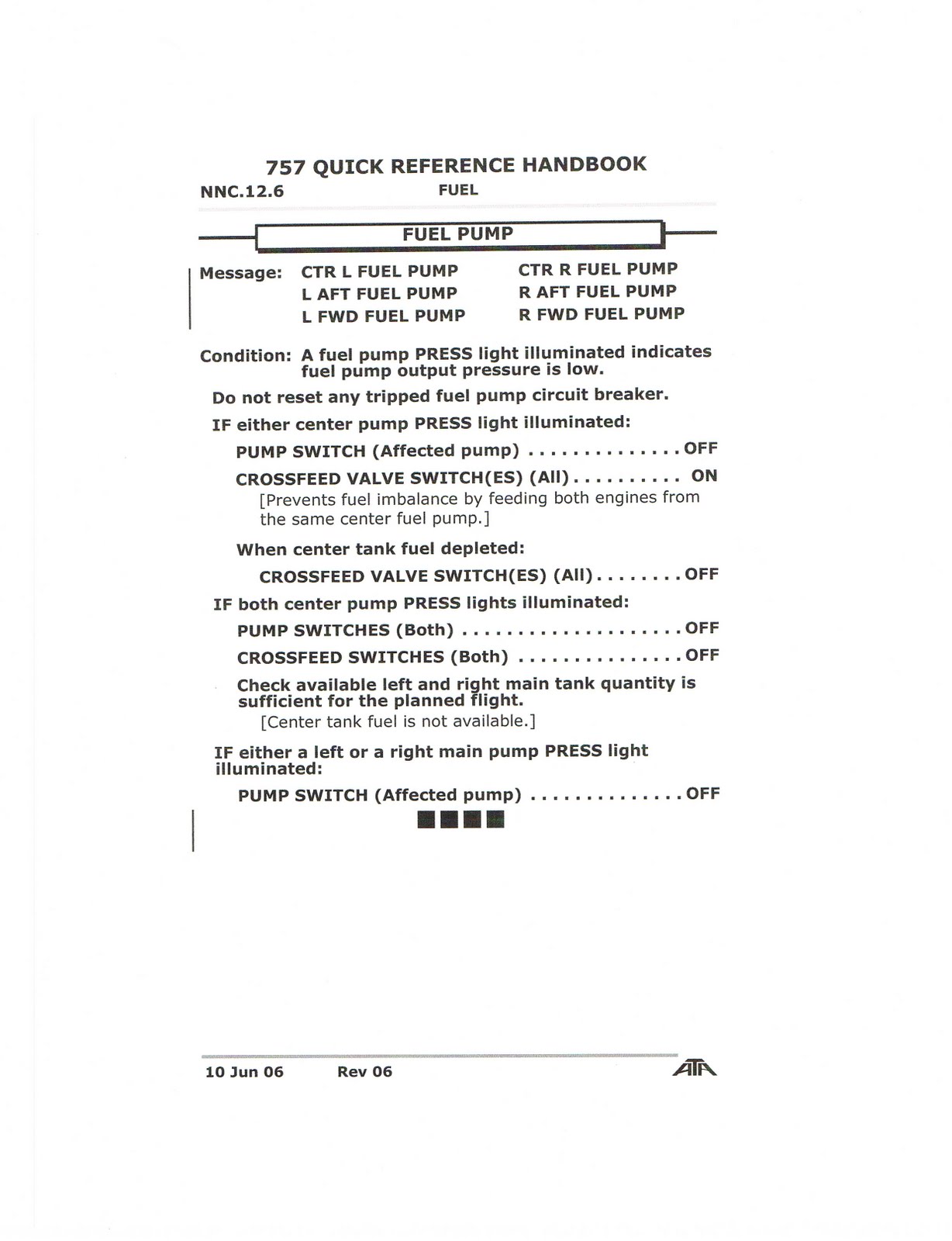
(Double click on image to enlarge.)
I have written previously about adapting professional lessons in cockpit management to single pilot operations (October 2009, November 2009 and December 2009 posts), and this is a specific application of those techniques: creating a quick reference handbook.
One of the main differences between a three man cockpit (okay, three crewmember cockpit) and a two man cockpit is that with a three man cockpit you can designate one pilot to fly the aircraft, while the other two work on the problem. With two crewmembers to work on the problem, one can do the research—get out the aircraft operating manual, go through the various problem solving trees to identify the specific problem, and then, with the help of the non-flying pilot, run the appropriate checklist and attempt to solve the problem. (I review this process in some detail in the October 2009 post, “Single Pilot Cockpit Techniques, Part I.”)
With only two crewmembers, you just can’t do this. You are either going to have one pilot doing the research and running the checklist by himself, with no one to monitor and assist him, or worse, you’re going to have both pilots working on the problem and no one watching the airplane. But the airlines knew problems will occur with any airplane and that they have to be fixed, so a solution was needed and the result was the creation of something called a Quick Reference Handbook (QRH). So what’s the difference between a QRH and just using common sense, training and aircraft knowledge to solve the problem from memory, and how can a QRH be applied to single pilot operations, where one pilot has to both fly and solve the problem?
A QRH is essentially a problem solving checklist associated with a specific indication. That indication could be an annunciator light, a message on a multi function display (MFD), or a warning light. It could even be something not specifically annunciated, but indicated, such as electrical smoke or fumes. In each case, something specific has happened and the QRH, following a prescribed format, will note the indication (to make sure you have the right checklist), briefly describe what has happened (you would have to get into the operating manual for a detailed description), repeat any memory items to make sure they got done, and then tell you what to do often following an “if, then” format, the “if not” choice leading to the next step.
The example above comes from the ATA Boeing 757 QRH for failure of one or more fuel pumps. The annunciation in this case is a message on the MFD for the specific pump that has failed. If that isn’t the correct message, you have the wrong checklist. The condition describes what has happened. (It’s obvious in this case, but won’t always be.) Under that is a warning, taken directly from the Boeing operating manual, not to reset any fuel pump circuit breakers: you can manage the loss of a single pump, but you do not want to take a chance that the breaker popped because of a feeder fault—an ignition source. Then it says, “IF either center pump PRESS light illuminated”, turn it off: you look overhead to the pump switches, if either has a PRESS light illuminated, a part of the switch, push it which turns it off. Very simple. If not, neither center pump press light illuminated, go to the next step. (Note that if both center pump switches are illuminated, now you have a bigger problem because you have no way to pump the fuel from the center tank which is essentially an aux tank for the 757.) If that is not the case, then one of the wing pump press lights must be on—something triggered the message—so identify which one, turn it off and proceed. (As a matter of interest, there isn’t a warning for both main pump press lights being on because the engines will suction feed from the wing tanks, so you just turn them both off it that is the case. But if I had written this QRH entry, I would have made a note of that.)
So that’s how a QRH checklist works. It is designed to be as simple and direct as possible so that one crewmember can find it, read it, and then accomplish it without backup, assistance, or verification. And the same thing can be developed for whatever aircraft you fly. Your “pilot flying” will have to be the autopilot, leaving you free to find and accomplish the checklist, but the principle is the same. (I’m assuming you are flying IFR; VFR is a little more tolerant and you should be able to hand fly and consult the QRH at the same time if you don’t have an autopilot.) It will take a little work to create a complete QRH, but it will be worth it, if for no other reason than that it will get you back into your operating manual in some detail.
First you need to identify the annunciations for your aircraft. Do you have an annunciator panel? If you do, each light should have a corresponding QRH checklist. What other warning lights do you have? Low oil pressure, vacuum failure, generator/alternator failure? Finally, what are the non-annunciated failures? Most of these you will get by going through your operating manual, particularly the emergency section, and listing problems that have no annunciation, like the electrical smoke or fumes previously cited, engine failure, gauges out of limits with no other indication, and so on.
Once you have your list, you are ready to make up your QRH responses. Remember to start with the annunciation, indication or condition, to make sure you have the right checklist. State in as simple a sentence as you can what it means: “Engine driven pump failure”; “Vacuum pump failure”; “Gear not confirmed down and locked,” etc. If there are any prohibitions or warnings, they should come next, not at the end when it may be too late: “Gear must remain extended after manual extension. Do not reset any handles, switches or circuit breakers.” Then go through a step by step procedure, using an “if, then” format as necessary, to solve the problem.
Here’s how one might look for a Beech Baron 58P vacuum pump failure:
VACUUM PUMP FAILURE
Indication: A left or right red button in vacuum pressure gauge indicates pump failure.
Condition: Left or right vacuum pump has failed.
IF one button visible:
No action required. Attitude and heading gyros, pressurization, and deice boots will operate normally on remaining system. Vacuum system redundancy lost: Monitor remaining system.
IF both buttons visible:
Attitude and directional gyros lost. Control attitude and heading with turn coordinator, airspeed, altitude and compass.
Pressurization control and safety valve control lost. Descend as soon as possible to 12,500 or less.
Surface deicing boots will not operate.
Land as soon as possible.
The only difference between an annunciated checklist and an un annunciated checklist is that the later won’t have an “Indication” or “Message” heading, because there isn’t one. Here is an example of a QRH checklist for Engine Fire In Flight, memory items in red, again for the Beech Baron 58P:
ENGINE FIRE IN FLIGHT
Condition: Fire in the engine compartment.
Fuel selector—OFF
Mixture—IDLE CUT-OFF
Prop—FEATHER
Cabin Press Air Shutoff Control—PULL
Fuel Boost Pump—OFF
Magneto/Start Switch—OFF
Alternator Switch—OFF
Oxygen—AS REQUIRED
Air Cond/Press Air Cool Switch—OFF
Refer to Single Engine Checklist
Land as Soon as Possible.
One of the most important attributes of a well thought out QRH checklist is that the order in which items are accomplished is based on the priority of the item: most critical items first, least critical last. Working entirely from memory, this won’t always be the case: I’ve had a fire, I shut down the engine, now what? What else should I turn off and in what order? Magnetos off next or fuel pump? Should I turn the alternator off? Will I lose half my electrical system if I do that? The QRH tells you what to do and the order in which to do it. What has to be done from memory has been done, the immediate emergency is over. Now follow up in an orderly, methodical and complete way using the QRH checklist. When you’re safely on the ground you can get back into your manual and figure out why you didn’t lose half your electrical system when you turned the alternator for the damaged engine off or why the manufacturer thought it was better to turn the fuel pump off first and then turn the magnetos off. In the air you just want to do the right thing.
The fun part about all this is you can be as creative as you want: do you want colored borders to separate emergencies from abnormals, for instance; do you want laminated, individual checklists collected in a packet or pocket, or do you want them tabbed ,in a binder; how do you want to organize the information, and how will you use caps, bold print, italics, different font sizes and color to highlight that organization?
There is no denying that developing a QRH for even a non-complex single engine aircraft will take some doing, and for a pressurized twin quite a bit of doing. But here’s a suggestion for making it easier and possibly even a little bit more fun: don’t try to do it all at once. Once you have a pretty good list of emergencies and abnormals, both annunciated and unannunciated (and remember it doesn’t have to be 100% complete, you can always add checklists later as you become aware of the need), then work on how you want it organized and assembled. Then decide which one you want to work on first. I would suggest doing either one of the most critical emergencies first, like engine fire, or one of the most common faults, like vacuum pump failure. (That’s part of the reason I used those as examples.) Take that one to the airplane and then, over time, keep adding to your collection. This gives you an immediate reward for your effort up to that point, and as you fly around, knowing that your QRH is not complete and hoping nothing comes up before it is complete, you will be motivated to keep working on it.
There is one final good reason for having a QRH . One of Lockheed’s most famous test flight engineers for the L-1011 was asked what the most important thing to do was following any emergency or abnormal situation in that aircraft. He said, “Start the clock, then put your hands under your seat for 60 seconds.” The L-1011 was an incredibly well designed airplane, and almost anything that could go critically wrong with its systems had a built-in, automatic initial fix. It was the flight engineer’s job to then get the book out and fix what remained, see what parts could be restored, and deal with what was lost. The way to do that was to go slowly, and the way not to do that was to start pushing switches, closing valves, disconnecting drives, elbows flying, hands and fingers all over the panel. First, just sit on your hands.
The QRH does the same thing for you. There are a few memory items for any pilot flying any aircraft, critical steps that must be taken immediately, from memory, to prevent catastrophic failure or damage. But there aren’t many. And once those items have been taken care of, that’s when you need to sit on your hands. And the first thing you want them to touch after that is a QRH.
Tuesday, February 1, 2011
Ski School

Photo courtesy of Ray Hubbe.
I just got back from another ski trip with my buddies, this one to Jackson Hole, Wyoming. (See “Big Sky, Montana,” January, 2008, and “Amazing,” December, 2007, for posts on previous trips.) As always, linking a ski vacation with aviation is a bit of a stretch, but, as always, I have found a way. This time it involved riding up the ski lift.
There are two main lifts at Jackson Hole, the big one a tram that takes a hundred or so skiers all the way to the top of the mountain, some 10,000 plus feet above sea level, with all expert terrain starting down. (The base of the resort is 6300 feet MSL, giving a drop of approximately 4000 feet, one of the highest in North America.) This particular day my buddies were riding that lift, but I had opted for easier terrain for awhile and was skiing by myself, going up the second major lift, a gondola, going up to about 9000 feet and taking about 10 minutes to get to the top. They hold up to eight skiers, but it wasn’t a real busy day so none were full, and on this particular ride I was joined, somewhat to my surprise for a weekday morning, by two young kids, a boy of about 10 and a girl of about 8. They were very polite, well behaved and friendly, and seemed amenable to chit chat, so I asked them how it was that they were so lucky to be skiing instead of in school. The boy said, “Homeschooling.” I said, “So you’re pretty lucky. You get to ski and go to school at the same time,” and the little girl said, “Our dad teaches us on the gondola.” I wasn’t sure how much teaching could be done on a 10 minute gondola ride, but I didn’t say that. I did say, “So where is your dad?” and the girl said, “He’s one or two gondolas back with our older sister.”
So I just looked at these two very outgoing and precocious kids and said, “So we need to have a lesson. Do you want to learn about airplanes?” They both burst into big smiles and said simultaneously, “Yes!” Scrambling quickly, I thought, well, let’s just start with Day One of flight training. I told them that the first thing you were normally taught when you were learning to fly, after you had been taught to preflight the airplane, was straight and level. I explained what straight meant, maintaining a heading, and that level meant to maintain a constant altitude, that you have a compass to tell you your heading and an altimeter to tell you your altitude, and the basic control inputs to correct for each. Then we talked a little bit about learning to fly in general, that you had to be 16 to solo airplanes and 14 to solo gliders, and that it didn’t take too long to reach that point so it didn’t make too much sense to start early, but that when they got close to those ages that was the time to think about it. At that point we were at top, said our goodbyes and got out.
We were all still pretty much together getting our skis on and the little girl said to me, “That’s our dad,” pointing out a very fit looking 30 something guy moving away from the gondola and talking to a 12- or 13-year-old girl. The older girl came over and said, “I love your hat,” and we all skied off in our own directions.
Friday, November 12, 2010
Enough is Enough

Aviation has lots of folksy sayings, most of which, in my opinion, are more often wrong than right. One of the more familiar is, “The only time you have too much fuel is when you are on fire.” It’s clever and it’s funny, but it isn’t true.
Of course we always want to have plenty of fuel, and figuring out what “plenty” is is the point of this post, but that doesn’t mean more is always better. More is certainly not better after a partial loss of power, for instance, regardless whether that loss was caused by a twin engine aircraft losing one engine or a blown cylinder or burned exhaust valve in a single. Nor is more the answer to trying to out climb trees on takeoff, to carry a load of ice, to try to top severe turbulence, or to fly out of down drafts from mountain waves. Fuel has weight, weight carries a performance penalty, and there are any number of situations where performance is more critical than endurance. So it’s just kind of stupid to say, “The only time you have too much fuel is when you’re on fire,” and, what I really don’t like about it is that it rationalizes careless flight planning.
One of the more familiar discussions pilots of high performance aircraft typically have is, how much fuel do you want to land with? What are your personal minimums for fuel? At what point does fuel get so low that you say, “Enough. I’m landing at the nearest suitable airport”? I remember having this discussion with several other pilots years ago when I was flying Citations and Falcons for a company in New Hampshire. The Chief Pilot, Stu Jones, was there too, but didn’t get involved in the conversation. That didn’t surprise us because he was not a big talker but when he did say something it was often quite clever and usually very funny. Finally someone asked him what his number was, and he said, “I always try to land with some.” That was funny. And, of course, directly to the point. Landing with “some” is what it is all about. One of the sayings in aviation that I do like is, “Takeoffs are optional, landings are mandatory.” Once airborne, sooner or later the aircraft is going to land, with or without the benefit of power. It’s always better to do it with power.
I started out in aviation in gliders and my first solo was in a glider. Gliders are great fun and a great way to get into aviation, and they are neither scary nor dangerous just because they don’t have engines. They do have “power", but it isn’t in the form of an engine, it is in the form of excess speed and altitude. From Day One in gliders you learn to enter the pattern with more altitude than needed to simply glide to a landing, and with more speed than needed to simply stay in the air. Both are then gradually dissipated, using spoilers, to maintain the desired glide path. You “add power” by reducing the amount of spoilers, and you “reduce power” by increasing the amount. The rough equivalent of a dead stick landing in a glider is arriving over the airport with minimum airspeed and altitude. In that case, you better get it right the first time, just like any dead stick landing.
The reason I started thinking about this again was because I noticed several ads for fuel monitors included something to the effect of being “GPS ready” or “GPS capable”. What, I wondered, did GPS have to do with fuel flow? So I looked into it a little further, and apparently what GPS does for fuel monitors is provide estimated fuel remaining at destination. I thought that was why we flight planned in the first place—so we would know estimated fuel remaining on arrival, and I thought that was why we kept a flight log enroute, so we could see how that estimate was holding up? If the trend was seriously negative, we could do something about it before we got to dry mouth time. There’s nothing wrong with having a running estimate of fuel remaining at destination, but it told me that if pilots were willing to spend extra money for it, it was because they didn’t have a very good idea otherwise. Any kind of a decent flight plan, one that includes winds aloft forecasts along the route of flight, is going to be better than a simple GPS estimate based on current groundspeed and the assumption that it will stay constant for the remainder of the flight. Now, a flight management computer, or any kind of computerized flight log with position input is the best of both worlds, but I don’t see where having a simple fuel remaining estimate based on current winds tells you a whole lot. It would be pretty disconcerting, for instance, to see that number start out big, and then watch it get smaller and smaller as the headwinds increased, or the tailwinds decreased, along the route of flight. Some information isn’t always a good thing.
I also know that, as a practical matter, most reciprocating aircraft have their tanks topped off after every flight. And I know that topping off the tanks is not always done just to simplify flight planning or to pay homage to the “You never have too much fuel unless you’re on fire” rule. Avgas and water don’t mix, the water settles in the low points and causes all kinds of problems, and full tanks minimize condensation. Also, most general aviation fuel tanks are rubber bladders and fuel keeps them from drying out. So topped off fuel tanks may be a practical fact of life for most general aviation pilots. But that doesn’t eliminate the need for good flight planning and for maintaining an enroute log, and it certainly doesn’t eliminate the question, “How much is enough”?
We know what the regs say (FAR 91.151 and FAR 91.167), but we don’t worry about them too much because, again, the tanks are always full and we don’t try to stretch our range, so we know we will always have enough, if we are VFR, to fly to our destination plus 30 minutes of fuel at normal cruise, 45 at night, and if we filed IFR we need that plus enough to “complete the flight” to the destination—that means descend, approach, and land—and after that fly to an alternate, as required. Assuming you do have only these minimum amounts of reserve fuel, what does that do for you?
VFR, not very much: 30 minutes of fuel is barely enough to see on the gauge, and who knows how much of that is water, gunk, or even usable as you turn from base to final? Forty five minutes at night isn’t much better. I’m not a big fan of VFR at night anyway, it’s hard to see the clouds, and pilotage is a whole lot more difficult at night—better hope that Garmin doesn’t take the night off. So day or night, these reserves are minimal and don’t allow for any contingencies, which is what the reserves are for.
The fuel requirement for IFR is a little better: enough fuel to actually fly to your destination, shoot an approach, do a missed approach, climb back to a safe cruising altitude, proceed to your alternate, land and still have 45 minutes of fuel at normal cruising speed to use, presumably, for your approach and landing there. (You don’t always have to have an alternate, but you’re nuts not to.) That’s quite a bit more fuel, but more to the point, there is a real purpose to it: fly to your destination and land; if unable, fly to your alternate and land there. I don’t really know where the FAA came up with “45 minutes at normal cruising speed”, but these rules go back a long long ways, and they provide the starting point for that question, “How much is enough?”
The NBAA (National Business Aviation Association) has established a minimum fuel profile that is frequently cited in ads and articles on business aircraft: “Range based on NBAA IFR reserves,” is a typical footnote, for instance. The NBAA profile includes fuel for a missed approach, climb to 5000 feet, hold for five minutes, climb at best rate of climb to the optimum altitude to fly 200 nm to an alternate at long range cruise, descend to sea level and land with 45 minutes of fuel. In other words, it flight plans fairly accurately and realistically a typical missed approach at the destination, diversion to the alternate, descent and landing. It is very useful for comparing maximum range of one aircraft to another, and it is useful as a model for realistic flight planning, but it doesn’t really address the issue of how much is enough when you finally do land; it assumes that, ultimately, the FAR 91.167 minimums are adequate. So it’s great for comparing range for one aircraft to another, but not so great at telling you whether you would actually want to fly that aircraft that far.
There are two other interesting lessons implied by this profile, one is that there is no fuel allotted to try the approach again—it assumes you try once and if you miss you go as directly as possible to your alternate and you land there—and it assumes you always will have an alternate. My view on this, discussed in some detail in a previous post, “The Other Part of Flight Planning,” January 2010, is that that is exactly what you should always do: shoot one approach, if unable to land divert to an alternate, one with a precision approach and weather forecast well above minimums, and land there. Too many general aviation accidents occur on the second and third try at the destination; professionals just don’t fly that way and professionals don’t have those kinds of accidents.
So we still haven’t completely answered the question, “Is 45 minutes of fuel based on normal cruise fuel flow adequate or not?” and the only way, I think, that question can be answered is to ask, “What is that reserve fuel for?” The first thing it is for, the most basic, is to make sure there is always “some” fuel remaining at the end. That means, we want there to be enough fuel in the tanks that the needles aren’t resting on the bottom of the gauge—we want a little day light there. Again, who knows what’s in the bottom of those tanks? We want some fuel in the tanks when we finally land, and we want to know for sure that it is fuel and not water, sludge, rubber bits, dirt or anything else that won’t burn. (ATA had an engine flame out on a 1011 just before takeoff. Further investigation revealed that the fuel filter was clogged with bits of cloth and foam padding—a mechanic, working inside the fuel tank, had left his cushion behind. Probably not going to happen to Cessna 152, but strange things do find their way into fuel tanks.)
Let’s look at both 30 and 45 minutes of fuel at “normal cruising speed”, whatever that means. I happen to have five different pilot operating handbooks at home, and the only one that lists a “normal cruising speed” is the Piper Turbo Twin Comanche and that is also its highest power setting (other than max continuous). That’s okay if Piper wants to call it that, but it doesn’t necessarily make it “normal.” (“Old” Piper, that is. New Piper, with the Malibu in any case, another one of the manuals I happen to have on hand, goes back to calling it High Speed Cruise.) So, what is normal? The one your instructor told you to always use? The one that gives you a nice round fuel flow number like 10 gph? The one you happened to flight plan for that day? As far as I’m concerned they are all normal, so take your pick: the higher the power setting, the more fuel will be required. What about the airplane that normally burns 10 gph? Thirty minutes of fuel would be five gallons, typically split into two tanks: two and a half gallons per tank. That might get the needles off the peg, but not by much. Forty five minutes is only a little better, three and three quarters gallons per tank.
If we look at the Piper Turbo Twin Comanche performance charts, Normal Cruise is supposed to be 22.6 gph. Thirty minutes of fuel would be 11.3 gallons, 5 2/3 gallons per tank. Forty five minutes would be almost 17 gallons (16.95) or about 8 ½ gallons per tank. I can probably see that on the gauge, but I wouldn’t like what I saw. And remember these numbers come from using the highest normal power setting; economy or long range power settings would yield even less.
So I think we can safely say that the FAR minimums are not enough. How much more would we like to have, and, again, for what reason? First, we have to agree that the professional way of operating a flight, if we can call it that, is assumed here, or else we’re back to, “You can never have too much fuel.” Let me explain: If we agree that the way to flight plan and operate a flight is to always have a good alternate, and to proceed to that alternate after one try at the destination, then the amount of fuel we would like to have above and beyond that necessary just to fly that profile is a legitimate and serious question. If we don’t agree with that premise, if we want to have the option to try the same approach again, hoping for better weather, or the chance to try to fly the approach better and not have to go around the next time, or to try a different approach, or to hold for awhile hoping the weather improves, or if none of that works, to try the nearest airport to the destination and if we can’t get in there either try another one, then we’re back to taking as much fuel as we can and hoping that will be enough. So if you don’t agree with the basic premise, you can stop reading right now because the rest is irrelevant to you. And good luck.
But let’s assume you have flight planned carefully and you know exactly how much fuel it should take to go to your destination, shoot an approach, do a missed approach, proceed to your alternate, shoot an approach there and land with 45 minutes of fuel remaining. Is that enough, or do you want a margin above that, and for what reason? Well, I think it is obvious that you want more that just enough, if for no other reason that these are flight planned numbers, not real world. In the real world, fuel burns are often higher than book values and airspeeds slower. In the real world you don’t always get the routing you requested or the altitude, the winds aloft are sometimes less favorable than forecast, thunderstorms and icing conditions force detours, and congestion results in vectoring and holding. You don’t often get all of these adverse factors on every flight, but almost all flights will be affected by one or more of these factors, and they all require more fuel. So again, how much?
There are, I think, three ways to look at this. The first is to try to come up with a reasonable and conservative number to account for several, but not all, possible adverse factors. (If you have a really bad day and all of these negatives combine, your enroute log will say to you, “This isn’t going well. You need to land now.”) The second way is to increase the minimum fuel by a given percentage, and the third way is to increase the fuel in terms of additional flying time. All three work, and I’m not sure any one is better or worse than the others; for sure the first one is the most complicated, but it is possibly also the most accurate. Each will be more or less conservative depending on the assumptions made: How many adverse factors do I expect, and what will be their effect?
The airlines, under FAR 121, are required to increase their enroute fuel by 10% when operating internationally. That can be a bunch of fuel for a long flight. (The airlines have found a way around this in the form of a re-release flight plan, which is way too complicated to get into here, but it shows the limitation of the simple percentage method: too much extra fuel on long flights, not enough on short ones.) For the Piper Turbo Twin Comanche, a long flight might require 80 gallons of fuel from takeoff to destination. Ten per cent would mean adding another eight gallons, or about 30 minutes, plus or minus a few minutes depending on the power setting. That seems pretty reasonable to me: 30 minutes of deviating, of groundspeeds slower than flight planned, of getting vectored around, of having to fly lower or higher than desired to stay out of ice, or some combination of all of the above, sounds pretty reasonable to me. (Remember, this is fuel above the 45 minutes required by regulation.) If you want more, or experience shows that that still leaves too many sweaty palm situations, increase it. But have a number, keep track of it enroute, keep records and review them to see how your number is working out, and amend that number as real world experience dictates.
Why do we do this, if, as is usually the case, the aircraft is already full of fuel? What’s the point? You get the fuel you get, some days just a little more than what you need and some days a lot more, but what’s the point of figuring a specific fuel load for that flight that day if the tanks are already full? I think there are several good reasons, but perhaps the best is that you may find out that, even with full tanks, you don’t have enough fuel. That is, what looks alright based on rules of thumb and past experience isn’t enough when you take a more accurate and complete look at it: takeoff and climb, enroute, descent, approach, miss, climb, cruise to alternate, descend again, shoot another approach, land, add 45 minutes of fuel to that (FAR 91.167) and then your own personal number on top of that. And if full tanks won’t let do all of that, then a safe outcome is no longer guaranteed. It may seem like a lot of fuel, and most of the time, when everything goes pretty much as expected and you make a routine arrival and landing at your destination, it probably is, but sooner or later it’s not going to be.
So that’s good reason number one. Good reason number two is that it forces you to have a plan, one that you have assured yourself you have enough fuel for, and one that virtually guarantees a safe outcome. Any fuel above and beyond that required for the plan carries a weight penalty, but at least you know what that weight is. Good reason number three is that it might get you to thinking about ways to not top off the aircraft after every flight without encountering condensation problems or bladder drying. That’s a subject for another time, but suffice it to say that a regularly flown airplane, stored in a heated hangar, is a good candidate for fueling as required prior to flight.
My chief pilot was right: you always want to land with some fuel in the tanks. But topping the tanks off and relying on rules of thumb won’t guarantee that; the only way to guarantee that is to have a plan and stick to it. And fires have nothing to do with it.
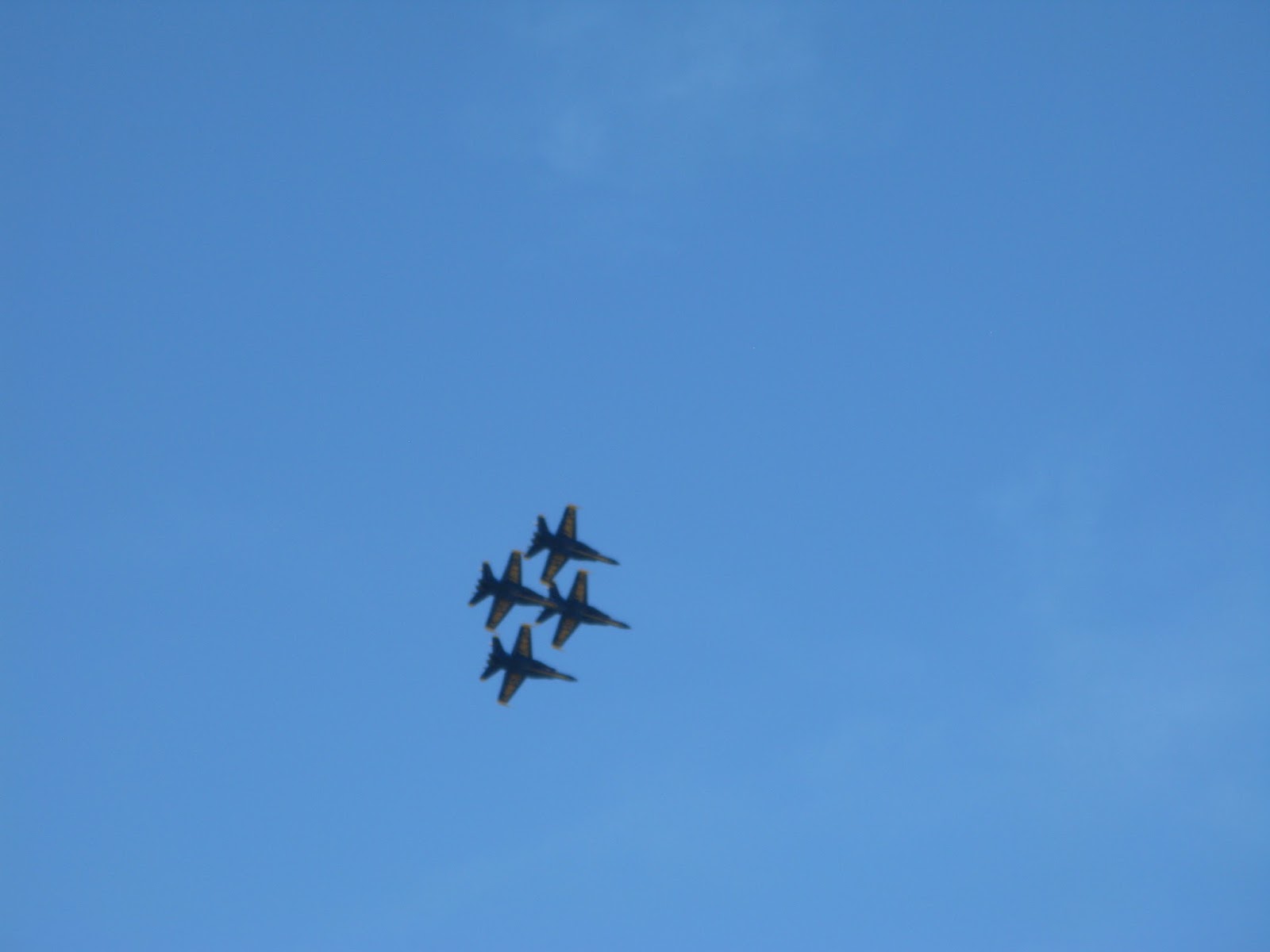
Subscribe to:
Comments (Atom)